Canada is rebuilding its military power. From new destroyers, submarines, fighter jets, AWACs and sub hunting patrol planes, armoured fighting vehicles and drones. The biggest change is “build it at home”. This includes manufacture of everything from torpedoes to nitrocellulose plants with enough capacity to help supply our allies as well. We are doubling our artillery shell capacity. Canada is building northern military hubs to oversee the Northwest Passage through our northern arctic waters. Canada’s new generation of Earth observation satellites, space launch facilities, over-the-horizon radar and new ports, roads, rail, and pipelines are just the tip of the explosive growth to establish Canada as a strong middle power with a wealth of resources such as; rare earth mineral mines and processing, LNG, oil, uranium, hydrogen, helium, aluminum, copper, nickel, cobalt and steel. With clean and cheap electricity from hydro-electric and nuclear power, Canada is poised for rapid growth in data centers for AI.
With a little nudge from our closest ally, the United States, Canada is moving closer to Europe and the Nordic countries that we share the same values with. Canada has free trade agreements now in place with many new trading partners and is less reliant on our southern neighbour.
Canada is diversifying our trade to more reliable partners and is building our military to protect our sovereign territory, especially in the north. Here are the bigger military items Canada is expanding:
- up to 15 new destroyers (type 26)
- up to 20 new blue water corvettes
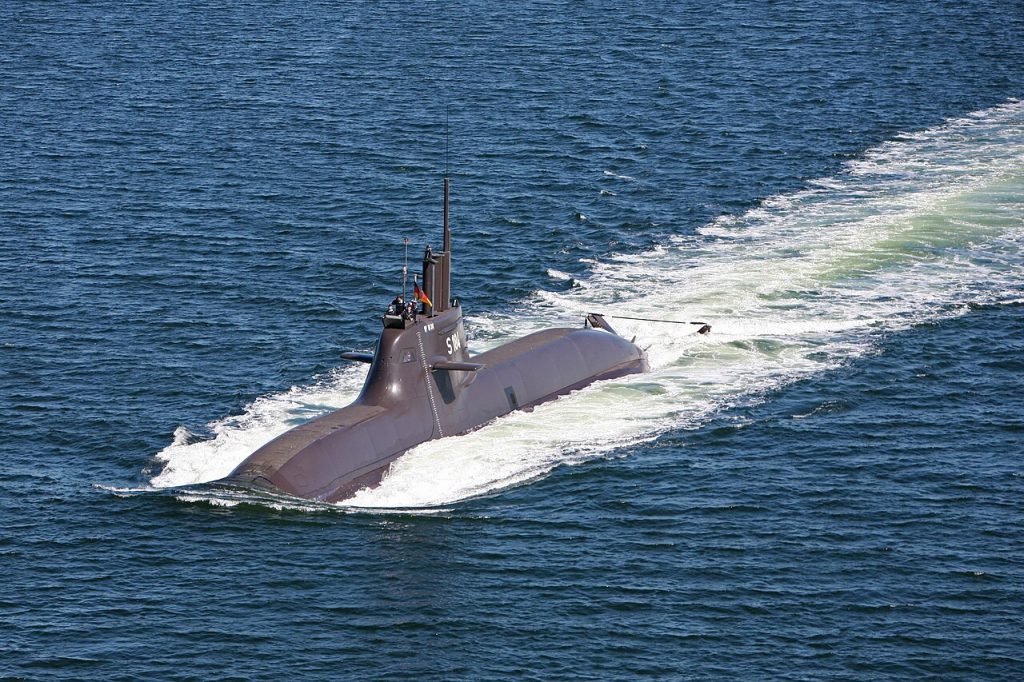
- up to 12 new submarines (in 2 batches; 8 then if all goes well 4 more 212CD subs)
- TKMS and Magellan Aerospace partnered to build heavyweight (533mm) torpedoes and the SeaSpider(ATT) anti-torpedo torpedo production in Canada
- Kraken (Canada) partners with Kongsberg Maritime Canada Ltd. providing their SEAFOX mine disposal vehicles, and SH Defense who will provide the containerized multi mission module system
- over-the -horizon northern long range radar $2.4 billion (Australian supplier)
- Polar Over the Horizon Radar Coverage over Canadian Arctic Archipelago
- new RADARSAT Constellation Mission satellites
- Telesat is targeting at least 96 satellites in orbit by early 2028, which is the minimum needed for full global coverage.
- Space launch facilities
- 16 P-8A patrol aircraft (anti-sub locate and destroy)
- 6 GlobalEye ( Bombardier-Saab AWACs)
- new mixed fleet of over 100 F35-Gripen fighter jets
- 16 new helicopters for special forces, approved but not moved forward, because they are made in the USA. Best helicopter for operations, but an option that is more for strategic reason of manufacture, where the engine and frame come from is available. It would be nice to invest in something that uses an engine we make. Nothing flies without maintenance.
- 26 High Mobility Artillery Rocket Systems (HIMARS) from the United States for approximately $2.6 billion CAD, with deliveries expected to begin in 2029
- new Ground to Air missile systems
- 11 new MQ9 Reaper drone sytems
- Make in Canada, 500-mile drone strike capability as part of its broader Canadian Deep Precision Strike Capability (CDPSC) project. Drones must be fast to mass produce and deploy, jammer proof, easy to update and stockpile while using a proven, available NOW design.
- Joint Ukraine-Canada drone manufacturing center in Canada
- new drone innovation facility in Mirabel, Que.
- upgrade tanks and replace with new by 2035 (hopefully this will include light tanks with 120mm smooth bore gun, for easier deployment)
- 250 new tracked armoured fighting vehicles (AFV) to support and keep up with tanks in all terrains
- 190 additional Armoured Combat Support Vehicles (ACSV will now be 550 bringing the LAV6 fleet to over 1100 units)
- 120 arctic tracked troop transports
- 100 155mm self-propelled howitzers
- four new fleets of tactical helicopters, beginning with special operations units in 2033
- An investment of $32 billion to expand and upgrade Forward Operating Locations (FOLs) in Yellowknife and Inuvik in Labrador. These enhancements include new hangars and airfield accommodations for next-generation fighter jets, as well as improved fuel and ammunition facilities
- A $2.67 billion investment is creating new northern operational support hubs(NOSH). This long-term investment will strengthen Canada’s military presence in the North and Arctic. The program will build a network of support sites to help the Canadian Armed Forces (CAF) respond faster, stay longer, and operate more effectively in the Canadian Arctic. These hubs will improve access, reduce logistical challenges, and support year-round operations. The NOSH Program will help protect Canadian sovereignty by enhancing the CAF’s presence across the Canadian Arctic and North. in Resolute along with smaller support nodes in Cambridge Bay and Rankin Inlet. These facilities allow troops to deploy rapidly and operate year-round in highly remote regions.
- An additional $294 million is being used directly for Arctic airport updates, including runway overlays and modernizations at the Inuvik Airport and Rankin Inlet Airport.the
Building a strong industrial base secures our future. Here are some of Canada’s biggest and/or most important projects:
- LNG Kitimat BC facility is fully operational
- TELUS is investing more than $70 billion over the next five years to expand and enhance its network infrastructure to handle the needs of AI and operations across Canada.
- Bell Canada expanding Sask. data center current construction project, out to a $52 billion 1.2 GW facility. (updated Sept14th 2026)
- Wider Churchill River/Gull Island/ Labrador package dam expansion and windmill farm investment of nearly C$70 billion, after expansion roughly 9–14 GW of generated power will be generated (equal to 18 Hoover Dams), enough for all future electric vehicles in Canada with enough left over for data centers and smelters to rapidly expand because of the secure, clean, cheap electrical supply.
- Canada announced a C$2.4-billion federal AI-support package, including substantial funding for domestic compute infrastructure. Separately, CPP Investments committed another approximately C$2.4 billion to EQT’s global EdgeConneX AI infrastructure strategy.
- The Port of Churchill Plus project is a transformative initiative aimed at expanding the deep-water port, modernizing the Hudson Bay Railway, and potentially adding a new energy and critical minerals corridor.
- 2 new Arctic Polar Class 2 ice breakers and 6 new Polar Class 3 ice breakers for the Canadian Coast Guard.
- West Coast Oil Pipeline Alberta’s government has prepared a submission for a world-class Indigenous co-owned pipeline to the west coast of British Columbia to strengthen Canada’s energy independence, increase global competitiveness and drive prosperity.
- Northern Shield Energy Corridor: The premiers of Alberta and Ontario unveiled a proposed 3,300 km west-to-east pipeline. It would run from Hardisty, Alberta, through Saskatchewan and Manitoba, ending in Sarnia, Ontario, to transport 500,000 to 800,000 barrels per day.
- New and expanded critical-minerals projects announced in 2026 include graphite, rare earths, phosphate, silica, lithium refining, and processing facilities in Saskatchewan, Manitoba, Ontario, Québec, New Brunswick, NewFoundland, British Columbia, and the Yukon.
- $355.7 million to construct a nitrocellulose facility at the General Dynamics – Ordnance and Tactical Systems of Quebec Valleyfield site.
- up to $57.9 million to establish Canada’s first facility capable of loading, assembling, and packing M231/232 charges used in 155mm artillery at the company’s Valleyfield site.
- up to $642 million to establish a manufacturing facility to load, assemble, and pack 155mm High‑Explosive projectiles at the company’s Le Gardeur site.
- 2 other nitrocellulose facilities are also under development: CellCore Technologies to supply 6,000 metric tonnes annually is well underway and 1 other startup is seeking gov’t assisted funding, This gives Canada enough raw material to supply all our allies with sufficient nitrocellulose for their needs. (Previously relied on China for most of their nitrocellulose).
- Saskatchewan is the hub for North America’s first fully integrated commercial rare earth element (REE) supply chain. With more rare earth mining and refining to finished products expanding in eastern Canada. (Previously the Western Allies relied on China for almost all their rare earth materials).
- Two uranium mines (Denison’s Wheeler River and NexGen’s Rook I) received federal construction approval, the first Canadian uranium mine approvals since 2004.
- First Atlantic’s awaruite discovery in Newfoundland is the largest nickel-cobalt alloy and chromium discovery in the Atlantic in 30 years and bypasses the processing bottlenecks that have been stalling Canadian critical minerals development for decades.
- Multiple critical‑minerals projects (nickel, graphite, tungsten and others) were added to Canada’s Major Projects Office fast‑track list to speed permitting and unlock investment.
- Several large B.C. mine projects and expansions advanced with approvals or permitting progress in 2025–2026, supporting a surge in mining investment in the province.
- Kraken Awarded $50+ Million Navy Contract for Royal Canadian Navy Minehunting Program.
- new drone innovation facility in Mirabel, Que. A consortium will receive $29.6 million over two years to build and launch the Uncrewed Systems Defence Innovation Secure Hub, which will include 30 organizations from industry and academia to develop and test new autonomous systems.
- De Havilland Canada is back! De Havilland is building a massive 1,500-acre aerospace hub called De Havilland Field about 11 kms east of Calgary. Production is progressing on the first DHC-515 aircraft, with structures being manufactured and assembled at the facility which has its own airport.
- Telesat’s low orbit satellite constellation ambitious project is heavily fueled by public money, backed by $2.14 billion in federal loans and another $400 million from the Quebec government. This brings the total taxpayer-funded support to $2.54 billion. Telesat is targeting to have at least 96 satellites in orbit by early 2028, which is the minimum needed for full global coverage. Future expansion has expanded out to 225 from 198 to meet Canadian northern military requirements of the LEO satellite array.
- Canada’s Department of National Defence (DND) has selected the first transmit and receive sites for its Arctic Over-the-Horizon Radar (A-OTHR) system, part of a broader $38.6 billion NORAD modernization effort
My Thoughts
Canada is a growing middle power but let us not make the mistake that the UK has. The UK still has its military trying to do everything and has ended up not being able to do anything well. After retiring 2 of its landing crafts, UK can now only deploy a rapid action force of 1 battalion of light armour. While Italy has a military of roughly the same size but without nukes at a budget of almost a third. Italy is able to do this because it is focused on the Mediterranean area and North Africa.
Canada needs to focus its limited forces on the North. We need to procure those things that will be the best fit for northern operations, not what will work best in Germany or the arid hot climates such as the Middle East. Our priorities must be to NATO and more specifically the Nordic regions. This may require us to look at a minimum, acquisition of 3 arctic capable landing RORO crafts in the 120 meter size (Damean’s LST 120) upgraded to handle seasonally freezing ice. These could aid in moving light tanks (CV90120) and the armour of 1-3 battalions over to the Nordic/Baltic region and also service small northern communities in peacetime. Canada must get involved in UN missions again, where Canada needs to be seen once more, (We seem to be abandoning the UN even though the majority of Canadian’s believe in a stronger UN presence) then we can truly say, “We are back“. Canada also needs to pick a specialty, so that our military really has something to offer our allies, such as electronic warfare for this new age of the “Wizard Wars” as British academic Mary Kaldor would say.
AI, bots, jammers, spoofers, crypto, radar, drones and satellites are all possible areas that Canada should grow into, so we could offer our friends something they need. Because we are never going to be a nation that puts large numbers of our boots on someone else’s soil even if it is an ally, we just do not have the numbers, so lets have something else we can offer.
Canada is finally doing what it should have been doing all along, have a credible military force. Ensuring Canadian sovereignty, while living up to our NATO commitments. Canada has in the past, had a real military. Now we are building a military for a new world order. Tough choices I am sure, but the one thing that we should have learned from the war in Ukraine is, your military must have depth. Having a few high end toys is not going to accomplish anything. You need to stockpile enough weapons to be able to carry you through the beginning of any crisis, till you can up production. Let me repeat myself, having depth and choice should be part of any military let alone a wealthy G7 member. Let me be as clear as possible about this, having just one type of fighter jet, one type of artillery system, one type of missile, is a plan for failure.
Canada is planning on purchasing an arctic tracked vehicle shortly, we are planning on buying basically the same thing we had before. It was great for moving troops around in a box on tracks linked to another box on tracks. I say yes, we need those built in Canada to protect our troops from our harsh arctic environment. However, the Patria TRACKX will do that, and protect our troops from small arms fire. If we really are going to be part of a Nordic alliance then lets get on board for real. Which means we need to be able to operate with them. Some of them are moving over to the Patria TRACKX, which is a lot faster and has light armour (2 things in combat that are nice to have). If not the TRACKX then something similar like a light aluminum hulled stripped down CV90, Redback or Lynx fighting vehicle. (Which would be smaller but we could build here in Canada, along with the tracked CV90, Redback or Lynk IFV) Then we could keep up with the Nordic TRACKX when involved in fast moving joint combat missions with our Nordic allies. Another purchase that will be happening shortly that Canada is looking into now is expanding our fleet of tanks. Modern war doctrine is pushing in a direction away from heavy armour and until the war in Afghanistan Canada had done away with heavy tanks and wanted a 105mm on a wheeled LAV. This proved unrealistic the gun was to much for the wheeled platform. We had to beg for tanks from Germany to deal with the IED and walled fortifications. However, our small fleet of heavy tanks is getting updated and now we realize we need more. The idea of a lighter tank with a 120mm smooth bore is available in the CV90120 and is built specifically for the Nordic battlefield. This would be a radical move for Canada, but the right move. I hope our military sees this path clearly, when moving forward in our new tank procurement and IFV from the same designer. (You need tracks and not wheels in the North)
The one piece that Canada’s navy needs very soon are arctic capable corvettes. Our frigates are getting very old and our new (River-class) destroyers, will number only between 3-6 by the time we have retired ALL of our frigates. I think our navy brass knows this all to well, lets quit playing politics. Let’s look at what we can do and do it. I realize we have only a limited amount of capacity for building ships and that we are actually churning some out (far better than the Americans are doing). Let us bring in the Ontario Shipyards and put them to work on the arctic capable corvettes which do not require any type of specialty steel under the supervision of Irving Shipyards. Let us not waste 7- 10 years designing these from scratch, Finland’s modern naval fleet centers around the Pohjanmaa-class multi-role corvettes, which is exactly what we need. It would be great if we had the same interoperable sub hunting and subs in the North Atlantic as other Nordic’s have so we can cross train our people, along with the Brits and Germans filling in the gaps.
On a side note about our new River-class Destroyers, these ships are not what most navies consider to be a destroyer. A destroyer is capable of taking the fight to the enemy by itself. Because it has about 100 VLS missile tubes, which our River-class ships do not have. Our ships have 24, but why we call them destroyers is that they have the Aegis Combat System which acts like a football superstar quarterback. But we still need someone to hand the ball to. Without the arctic corvettes our command ships are exposed to being swarmed. Let us get real and get building cost effective fighting ships; arctic corvettes in meaningful numbers.
About our destroyers: The River-class (Type 26) are really an excellent sub-hunting frigate, designed from the hull up to do just that, hunt and destroy subs, while defending itself with the Aegis combat system.
One last thought:
Canada is a leader in small modular reactor development. However, we do not produce the enriched fuel they need. So we will be reliant on the US and France. If we are really going to lead in SMR then we need to make their fuel also. The only thing holding us back on this is optics, our peace love dove, woke reality. The real reality is we need to put on our big boy pants and build our own enrichment facilities in the next 10 years before the demand for this fuel spikes. We need to take a leading role and not be held back from moving forward in our SMR development, which the world will need for clean energy in remote locations.